Learn how to increase cosmetic case acceptance with proven scripts, AI smile simulation for dentists, and objection handling. Boost your treatment.
Last Updated: September 20, 2026
Cosmetic case acceptance is the percentage of recommended cosmetic treatments that patients agree to start. Most practices lose cases long before money comes up. The real problem is that patients never clearly see what they are buying.
Three things quietly kill acceptance rates in most practices:
Trust can be a significant factor in case acceptance. Patients often respond well to clinicians who listen.
Build rapport with small moves:
Dental case acceptance scripts are not sales lines. They are structured questions that help patients reach their own decision.
Ask before you tell. Use this order:
The last question surfaces motivation. A patient who expresses a strong personal motivation, such as "I'd finally take photos with my kids," may be more inclined to accept treatment than one who expresses less interest.
Give two options, not five. Too many choices freeze people.
Try this structure:
AI smile simulation for dentists uses software to generate a preview of a patient's future smile in seconds. SmileViz runs this simulation chairside, so patients see a realistic result before they commit to anything.
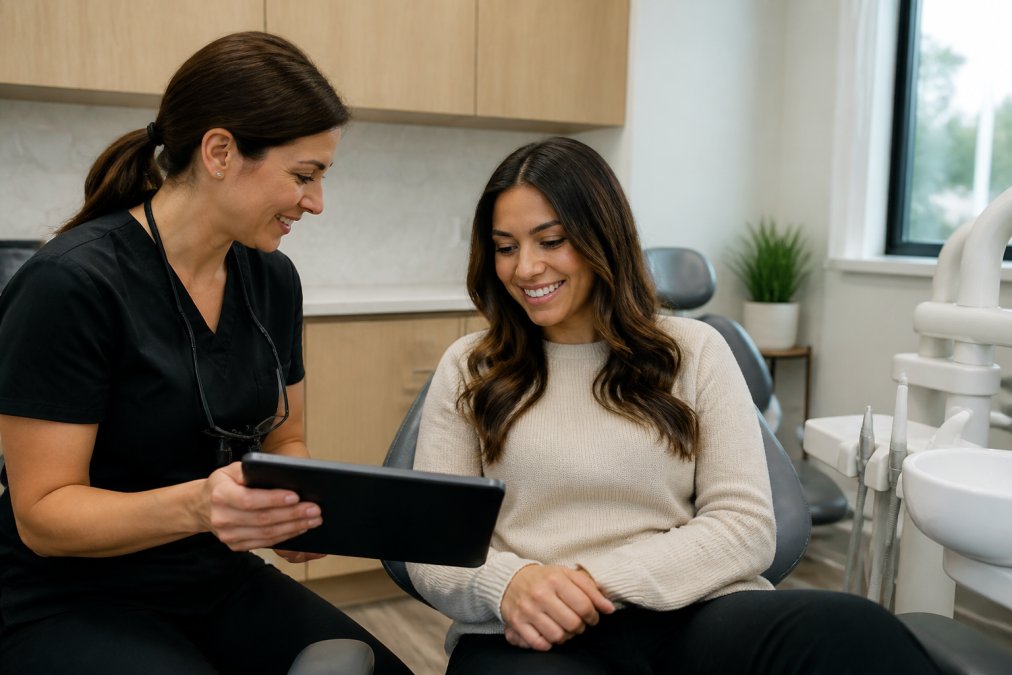
A quick note on accuracy: patients sometimes worry the final result won't match the preview. Set expectations early. Explain that the simulation is a planning tool and that final results depend on their case. Honest framing protects trust.
Overcoming patient objections in dentistry comes down to naming the fear out loud. Most objections fall into three buckets: cost, fear, and skepticism.
Cost. Do not defend the price. Reframe it. Break the total into monthly terms and compare it to what they already spend on small fixes.
| Objection | What It Really Means | Best Response |
|---|---|---|
| "It's too expensive" | "I don't see the value yet" | Show the outcome, then offer financing |
| "I'm scared of pain" | "I need control" | Explain sedation and step timing |
| "I need to think" | "I'm not convinced" | Book a short follow-up, not a hard close |
Money can be a significant barrier to case acceptance. Presenting cost in the right order, with appropriate framing, at the right moment in the consult can be beneficial.
Use this order in every cosmetic consult:
That pause after the number is the hardest part for most teams. Resist filling it. The patient is doing math in their head, and interrupting that math reads as pressure.
How you introduce financing changes whether patients use it. Compare these:
Most dental plans exclude purely cosmetic work, but many cover procedures that restore function or address damage. A crown placed for structural reasons may be covered even when the same tooth could also be treated with a veneer. Read the plan, document the medical necessity, and tell the patient exactly what is and is not covered before they commit.
Not every patient says yes today, and that is fine. A patient who declines because the timing is wrong is different from one who declines because they do not see the value. Log which one it was. The first group is a follow-up list. The second group needs a different conversation, not a bigger discount.
Most articles on case acceptance stop at the yes. However, tracking post-acceptance metrics can be crucial. If you cannot measure acceptance, it can be challenging to improve it or determine whether a change in your consult process was effective.
Track these monthly in your practice management software or a simple spreadsheet:
There is no single industry-standard acceptance rate, and anyone who quotes one number for every practice is oversimplifying. What matters is your own trend line. Analyzing data, split by provider and by treatment type, can reveal patterns. Differences in acceptance rates between providers on similar case mixes can often be attributed to process rather than individual personality.
The yes is not the finish line. Schedule a post-treatment check-in two weeks after the final visit. Ask two questions: "How does it feel when you smile now?" and "Would you do it again?" The first answer can provide insight into whether the result met the patient's expectations based on the simulation.
Assign one person to own the numbers. Review them in a short monthly meeting, not a long one. Pick one metric to move, change one thing in the process, and check the result next month. That loop, repeated, can be a distinguishing factor for practices aiming to grow cosmetic revenue.
The 50-40-30 rule is a case presentation guideline: spend 50% of the consultation listening to the patient's goals and concerns, 40% educating them on options and clinical outcomes, and 30% presenting the treatment plan. The idea is that patients accept treatment when they feel heard and understand the value, not when they are pitched first. Adjust the ratio based on how complex the cosmetic case is and how much the patient already knows.
Patients decide on cosmetic dentistry largely on what they can see. When you show a digital smile design or AI smile simulation during the consultation, the patient moves from imagining the result to viewing it. That shift reduces uncertainty and makes the value proposition concrete. Practices using chairside visualization may find that patients ask fewer skeptical questions and commit to treatment faster as the aesthetic goals feel more achievable.
Cost is the most common treatment barrier in cosmetic dentistry. Offering clear financing options during the consultation, rather than after the patient asks, removes the friction of a separate conversation. When you present monthly payment scenarios alongside the treatment plan, patients compare the cost to their budget in real time instead of leaving to think about it. Dental financing also signals that you understand their situation and want to make treatment accessible.
Track your consultation-to-treatment conversion rate, average case value, and the percentage of patients who accept on the same day as the consultation. Also monitor follow-up response rates for patients who leave without deciding. These metrics show whether your case presentation, scripts, and follow-up protocols are working. Review them monthly and tie changes in your consultation process to shifts in these numbers so you know what actually moves the needle.
Raising cosmetic case acceptance is not about better sales lines. It is about showing patients the result before they decide. SmileViz makes that possible in seconds, right in the chair, with AI-powered simulation built for real consultations. Dentists and labs love SmileViz because it turns interest into action. Book a demo and see how SmileViz helps you close more cosmetic cases.
Show patients their future smile in about 90 seconds and close more cosmetic cases chairside.
Book a free demo
AI smile previews that help patients say yes, before, during, and after the consult.