Master cosmetic dentistry marketing strategies to boost case acceptance and grow your practice. Learn proven tactics for 2026.
Last Updated: September 25, 2026
Cosmetic dentistry marketing requires a fundamentally different strategy than general dentistry. A patient choosing a filling makes a clinical decision; a patient choosing smile transformation makes a life decision with higher emotional investment and longer decision-making.
Cosmetic dentistry marketing strategies diverge sharply from general practice promotion. General dentistry focuses on convenience and clinical competence; cosmetic dentistry must address desire, transformation, and confidence. Patients researching smile makeovers evaluate whether a practice understands their aesthetic vision and can deliver matching results.
Practices that treat cosmetic marketing as an afterthought see lower case acceptance and longer sales cycles. Practices that build dedicated cosmetic dentistry marketing strategies see higher conversion rates and attract high-value patients.
Cosmetic patients need to visualize their future before committing, proof that you understand their goals, and confidence the investment will deliver their imagined transformation. Your marketing strategy must address each barrier directly.
Cosmetic dentistry lead generation operates on different principles than general practice. High-value patients move through the pipeline more slowly and require targeted messaging at each stage.
The digital funnel for cosmetic dentistry marketing emphasizes aspiration. Potential smile makeover patients begin by searching for inspiration, before-and-after galleries, and transformation stories, exploring what's possible before scheduling.
Capture early-stage prospects through content demonstrating transformation: blog posts about smile design, before-and-after galleries, and testimonials that build credibility.
The middle of the funnel uses targeted messaging about your consultation process, technology, and case acceptance approach. Email sequences and educational content position your practice as an aesthetic dentistry expert.
The bottom of the funnel is the consultation, where real-time smile simulation software transforms abstract discussion into concrete visualization of potential results.
High-intent searchers use terms like "smile makeover near me" or "cosmetic dentist for veneers." Target these keywords aggressively with landing pages emphasizing expertise, results, and frictionless scheduling.
Inspiration-stage searchers use broader terms like "smile transformation" and "before and after smiles." Target these with blog posts, case studies, and visual galleries showcasing your work.
Awareness-stage prospects search general terms like "improve my smile." Use social media and educational content to educate about possibilities without pushing immediate conversion.
Geo-targeting is essential for cosmetic dentistry lead generation. Optimize your Google Business Profile, ensure consistent local citations, and include geographic modifiers in paid search campaigns.
Case acceptance is where cosmetic dentistry marketing strategies prove their ROI. Without conversion during consultation, marketing spend is wasted.
Dental case acceptance strategies focus on building credibility, addressing objections, and creating urgency through before-and-after galleries, testimonials, and credentials.
Address common objections, cost, durability, and natural appearance, proactively through blog posts on smile design philosophy, treatment longevity, and case studies showing natural results.
Before-and-after galleries are the most powerful tool in cosmetic dentistry marketing, visual proof of transformation that helps patients imagine their own results.
Organize your before-and-after gallery by treatment type and showcase diverse smiles, starting points, and skin tones so a wider range of prospects see themselves reflected.
Professional before-and-after photography with consistent lighting and color balance is non-negotiable, poor quality undermines credibility and reduces case acceptance.
Arrange cases from subtle to dramatic transformations so patients understand the range of possibilities and identify their preferred aesthetic direction.
The consultation is where cosmetic dentistry marketing strategies culminate into case acceptance, the conversion moment that matters most.
Start by understanding the patient's vision: what bothers them about their current smile, what their ideal looks like, and what concerns they have.
Show patients their potential results using real-time smile visualization. The ability to adjust tooth shape, shade, and positioning in real-time addresses the primary concern: will the result match my vision?
Present treatment options at different price points and explain what each delivers. Let patients decide based on clear information.
Create a treatment timeline showing when patients will see results and what to expect at each stage. This increases case acceptance.
Real-time smile simulation software bridges the gap between dentist vision and patient imagination, directly addressing the primary barrier to case acceptance: uncertainty about results.
Cosmetic patients operate on emotion and visualization. The more vividly they imagine transformation and the more confident they are it will match their vision, the more likely they accept treatment.
Real-time smile simulation makes visualization concrete, transforming the consultation from abstract discussion to visual decision-making.
Patients see their future smile and feel immediate emotional connection, committing to a specific visualized outcome. This reduces buyer's remorse and increases case acceptance.
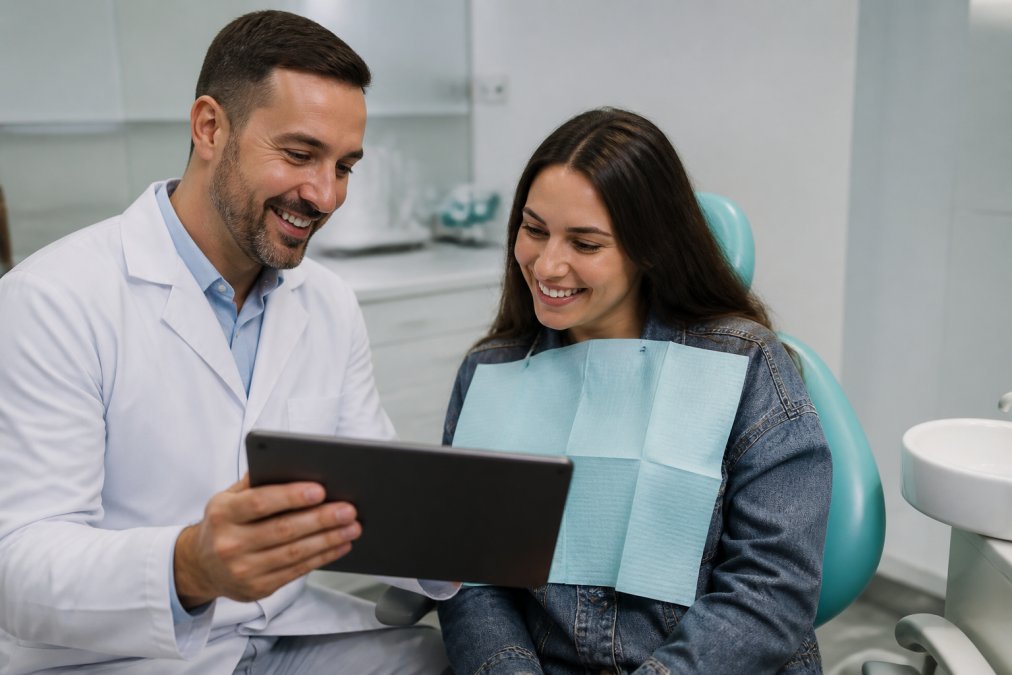
Advanced visualization tools signal to patients that your practice is modern, professional, and serious about cosmetic work, increasing case acceptance.
Integrate smile simulation software seamlessly into your consultation process so it feels like a natural part of how you consult.
Listen first to understand the patient's vision, then use simulation software to show matching options. Adjust in real-time based on feedback, making patients feel heard and invested.
Train your team to use the software confidently. Clinical staff should adjust tooth shape, shade, and positioning smoothly, enhancing rather than distracting from consultation.
Document simulation results as a reference during treatment, ensuring your final result matches the patient's vision.
Cosmetic dentistry marketing strategies must prioritize local search ranking, as most searches include geographic modifiers like "near me" or city names.
Social media showcases transformation. Visual platforms like Instagram and TikTok are ideal for before-and-after content, testimonials, and behind-the-scenes consultation glimpses.
Patient testimonials are the most credible form of social proof in cosmetic dentistry marketing. A prospective patient trusts another patient's experience more than they trust your marketing claims.
Cosmetic dentistry marketing strategies should optimize not just for initial case acceptance but for patient lifetime value. A cosmetic patient who accepts one case is likely to accept additional cases over time. They're likely to refer friends and family. They're likely to become your most loyal patients. Cultivating this long-term relationship requires offering a diverse range of services, including affordable cosmetic dentistry, to ensure that every patient finds a path toward their ideal smile that remains sustainable throughout their journey.
| Strategy | Primary Goal | Best For | Timeline |
|---|---|---|---|
| Before-and-After Galleries | Build credibility | Awareness stage | Ongoing |
| Smile Simulation Software | Increase case acceptance | Consultation stage | Real-time |
| Patient Testimonials | Establish social proof | Consideration stage | Ongoing |
| Local SEO | Drive qualified traffic | All stages | 3-6 months |
| Email Nurture | Move prospects through funnel | Consideration stage | 30-90 days |
| Referral Programs | Generate high-value leads | Post-treatment | Ongoing |
Many cosmetic practices underinvest in marketing because they assume word-of-mouth will drive growth. This approach leaves significant revenue on the table. Cosmetic patients are actively researching online. If your practice isn't visible in that research, competitors will be.
AI-powered dental smile simulation software lets patients visualize their results before treatment begins. When patients see their future smile in real time during consultation, they gain confidence in the treatment plan and are significantly more likely to accept the case. This technology bridges the gap between initial interest and final commitment by removing uncertainty from the decision-making process.
Combine local SEO optimization with targeted social media content featuring before-and-after galleries and patient testimonials. Establish your Google Business Profile with accurate service descriptions, encourage patient reviews, and create educational content that addresses common aesthetic concerns. Lead generation works best when you attract the right audience, high-value patients seeking cosmetic improvements, rather than chasing volume alone.
Cosmetic cases require a consultation strategy focused on patient vision and outcome confidence. Unlike restorative dentistry, cosmetic dentistry marketing emphasizes visual results, aesthetic psychology, and the emotional transformation patients seek. Use before-and-after galleries, smile design visualization, and consultations that explore patient goals rather than clinical necessity. This approach directly addresses what cosmetic patients care about most.
Patient education content establishes your practice as a trusted authority and answers questions before patients contact you. Create guides on smile design, teeth whitening options, veneer longevity, and the smile makeover process. Educational content reduces objections during consultation, builds brand authority, and attracts patients already convinced they want cosmetic work, not those still deciding whether treatment is right for them.
Focus on high-ROI activities: optimize your Google Business Profile for local search, build a referral program that rewards existing patients for recommendations, and create 5-10 pieces of evergreen educational content targeting local keywords. Invest in tools that directly support case acceptance during consultation, like smile simulation software, before spending heavily on paid advertising. Quality conversion matters more than traffic volume for smaller practices.
Track patient acquisition cost, case acceptance rate, patient lifetime value, and revenue per new patient. Monitor which marketing channels deliver high-value patients versus tire-kickers. Measure consultation-to-acceptance conversion separately from lead generation. These metrics reveal which strategies drive profitable growth. Many practices focus on new patient count but ignore profitability, track the right metrics to optimize for actual business impact.
Show patients their future smile in about 90 seconds and close more cosmetic cases chairside.
Book a free demo
AI smile previews that help patients say yes, before, during, and after the consult.