Learn 7 evidence-based strategies to improve dental case acceptance. Master treatment presentations, overcome objections, and close more cosmetic cases.
Last Updated: September 23, 2026
Dental case acceptance is the percentage of treatment recommendations your patients actually agree to pursue. Learning how to improve dental case acceptance is critical, when acceptance rates are low, you're leaving significant revenue on the table. More importantly, you're leaving patients' oral health unaddressed.
The gap between recommended treatment and accepted treatment isn't a minor issue. It's the difference between a thriving practice and one that struggles to grow. Patients come to you with problems. They trust your clinical judgment. Yet something breaks down between your recommendation and their decision to move forward.
That something is usually communication, not clinical skill. Your diagnosis is solid. Your treatment plan is sound. But the patient doesn't see it the way you do. They don't understand the urgency. They don't visualize the outcome. They worry about cost. They fear the process.
When dentists learn to present cases more effectively, acceptance rates typically improve significantly.
This guide covers seven proven strategies to improve dental case acceptance. You'll learn how to build trust faster, present treatment plans more persuasively, overcome common objections, and use technology to close cases from the chair.
Patient trust is the foundation of case acceptance. Without it, no presentation technique will work. With it, patients become partners in their own care.
Trust builds through consistency. Show up on time. Listen more than you talk. Remember details from previous visits. Follow through on promises. These small acts compound over months and years.
But trust also builds in the consultation itself. Here's what matters most:
The goal is to shift from expert-to-patient to partner-to-partner. When patients feel heard and respected, they're far more likely to accept your recommendations.
How you present a treatment plan determines whether patients accept it or hesitate. The difference often comes down to the words you choose and the sequence you use.
Most dentists present treatment plans clinically. They explain what's wrong, what needs to happen, and what it costs. That's necessary but incomplete. Patients need to understand the why, the what happens if we don't, and the what success looks like.
Here's a proven structure for presenting treatment plans:
Step 1: Establish the problem. Start with what you found. "Your X-rays show..." or "During the exam, I noticed..." Be specific. Use language the patient understands, not dental jargon. Instead of "Class II restoration," say "a cavity on the back tooth."
Step 2: Explain the consequence. What happens if treatment doesn't happen? "If we don't address this now, the decay will continue to spread. In six months, you might need a root canal instead of a filling." Connect the problem to outcomes the patient cares about: cost, pain, time away from work.
Step 3: Present the solution. Now describe the treatment. Walk through what happens, step by step. How long does it take? What will they feel? What's the recovery like? Remove mystery. Mystery breeds anxiety.
Step 4: Show the outcome. This is where visual aids become critical. Show before-and-after photos of similar cases. Better yet, use smile simulation software to show this specific patient their future smile. Seeing themselves with the desired outcome dramatically increases case acceptance.
Step 5: Address cost transparently. Don't bury pricing. Present it clearly. "The cost for this treatment is $X. We offer payment plans if that helps." Transparency builds trust. Hidden costs breed suspicion.
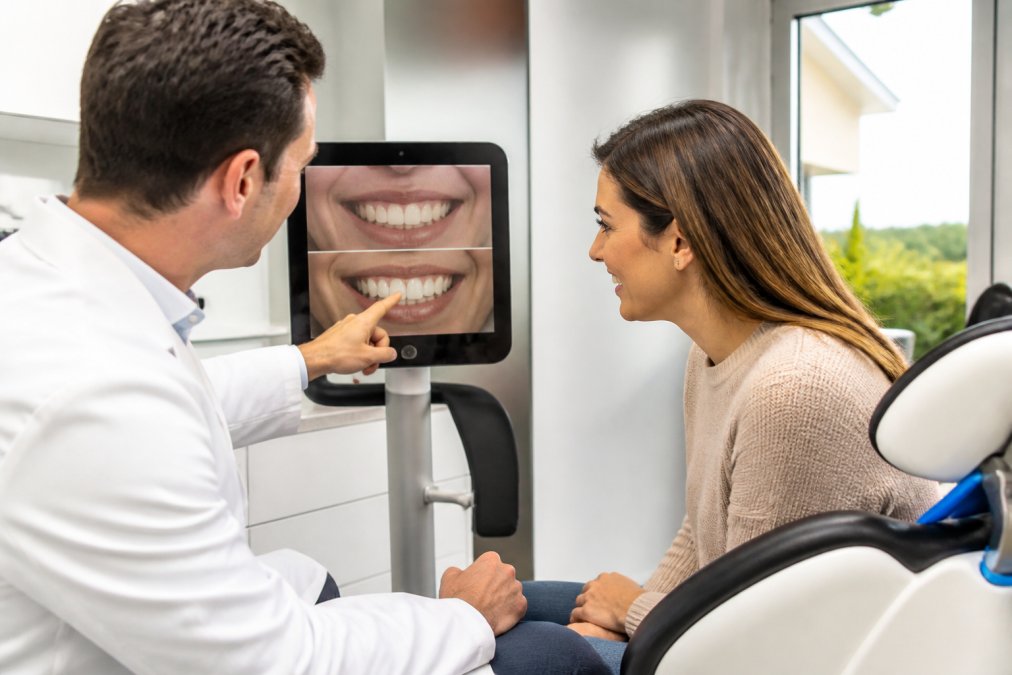
Visual aids transform case acceptance. When patients see their future smile, acceptance rates jump.
The most powerful visual tool is smile simulation. Before-and-after photos help. But a simulation showing their specific smile is incomparably more effective. They can see themselves. They can imagine the outcome. They can make an informed decision.
Smile simulation works because it bridges the gap between clinical recommendation and patient imagination. You're saying "this will improve your smile." They're thinking "will it look good on me?" Simulation answers that question directly.
The best simulations happen chairside, in real time. The patient sits in the chair. You show them the simulation on a monitor. They can see it immediately. They can ask questions. They can request adjustments. The decision happens while they're already emotionally engaged.
Simulations also serve another purpose: they start the conversation in the waiting room. If patients see a smile simulation before they even meet you, they arrive already imagining their future smile. That's a powerful head start.
When selecting simulation tools, prioritize accuracy. A simulation that doesn't match the actual result damages trust. The simulation should reflect realistic outcomes based on the patient's anatomy, not an idealized fantasy.
Patients raise objections for three reasons: they don't understand, they're afraid, or they don't see the value relative to the cost. Addressing the right objection matters.
"I don't see a problem." This means the patient doesn't understand the issue or its consequence. Use visual aids. Show them the X-ray. Point out the specific area of concern. Explain what will happen if treatment doesn't occur. Make the invisible visible.
"I'm afraid of pain." Fear is legitimate. Acknowledge it. Explain what they'll actually feel, not what they imagine. "You'll feel pressure and vibration, but no pain. The numbing medication prevents that." Offer sedation options if appropriate. Let them know they can raise their hand if they need a break.
"I can't afford it right now." Cost is a real barrier. Offer payment plans. Break the cost into monthly payments.
Money is one of the biggest barriers to case acceptance. But it's not always about inability to pay. It's often about how the cost is presented and what payment options exist.
Offer multiple payment options:
Technology can dramatically improve case acceptance when used correctly. The right tools help you present cases more persuasively and close them faster.
When evaluating case acceptance software, look for:
What gets measured gets improved. Track your case acceptance rate and you'll improve it.
Use this data to refine your process:
Visual simulation transforms abstract treatment plans into concrete outcomes patients can see and understand. When patients visualize their future smile before committing, acceptance rates increase significantly because they move from imagining results to seeing them. This bridge between clinical recommendation and patient confidence is especially powerful for cosmetic cases where aesthetic outcomes drive the decision.
Cost, fear, and lack of understanding are the primary barriers. Financial concerns often override clinical need, patients hesitate when they don't see the value relative to price. Fear stems from anxiety about pain or the unknown. Unclear treatment explanations leave patients unsure whether treatment is truly necessary. Addressing all three, through transparent pricing, anxiety management, and clear visual communication, significantly improves acceptance.
Most dentists and team members can begin using AI-powered smile simulation software within a single training session. The interface is designed for chairside use, meaning minimal disruption to your schedule. Basic competency takes hours, not weeks. The real value emerges as you integrate it into your consultation workflow and refine your presentation technique over the first few weeks of use.
Patient financing removes the primary financial barrier by breaking high-ticket cosmetic cases into manageable monthly payments. When patients can afford treatment without depleting savings, acceptance rates climb. Offering clear financing options, whether through third-party providers or in-house plans, signals that your practice values patient autonomy and removes cost as an objection before it becomes a dealbreaker.
Show patients their future smile in about 90 seconds and close more cosmetic cases chairside.
Book a free demo
AI smile previews that help patients say yes, before, during, and after the consult.